Mallorca is widely regarded as Europe’s road-cycling capital. Professional teams have long used the island for pre-season training camps, and each spring the northern bays fill with riders drawn by smooth roads, dramatic mountains and reliable weather. In one compact island you get the marquee climbs of the Serra de Tramuntana and the quiet flat lanes of the central plain for base miles. Here’s what makes it special — and where to sleep so your bike is as looked-after as you are.
Why cyclists love Mallorca
The variety is the draw. The northwest coast is dominated by the Serra de Tramuntana, a limestone range roughly 90 km long and a UNESCO World Heritage landscape, which packs in most of the island’s famous climbs. Inland, the Pla — the central plain — is a web of quiet, well-surfaced agricultural lanes ideal for recovery spins and endurance miles. You can chase mountains one day and roll flat the next without repeating yourself.
It is also a place built for cycling. Professional teams have used Mallorca for winter and early-season camps for decades, so the island is set up for riders: an established bike-hire scene, cyclist-oriented hotels, and roads where drivers are broadly used to sharing space (though, honestly, the busiest mountain roads do get congested in peak season). An estimated 150,000–200,000 cyclists visit each year, according to local reporting — enough that the whole northern-bay economy is geared around them.
The signature climbs
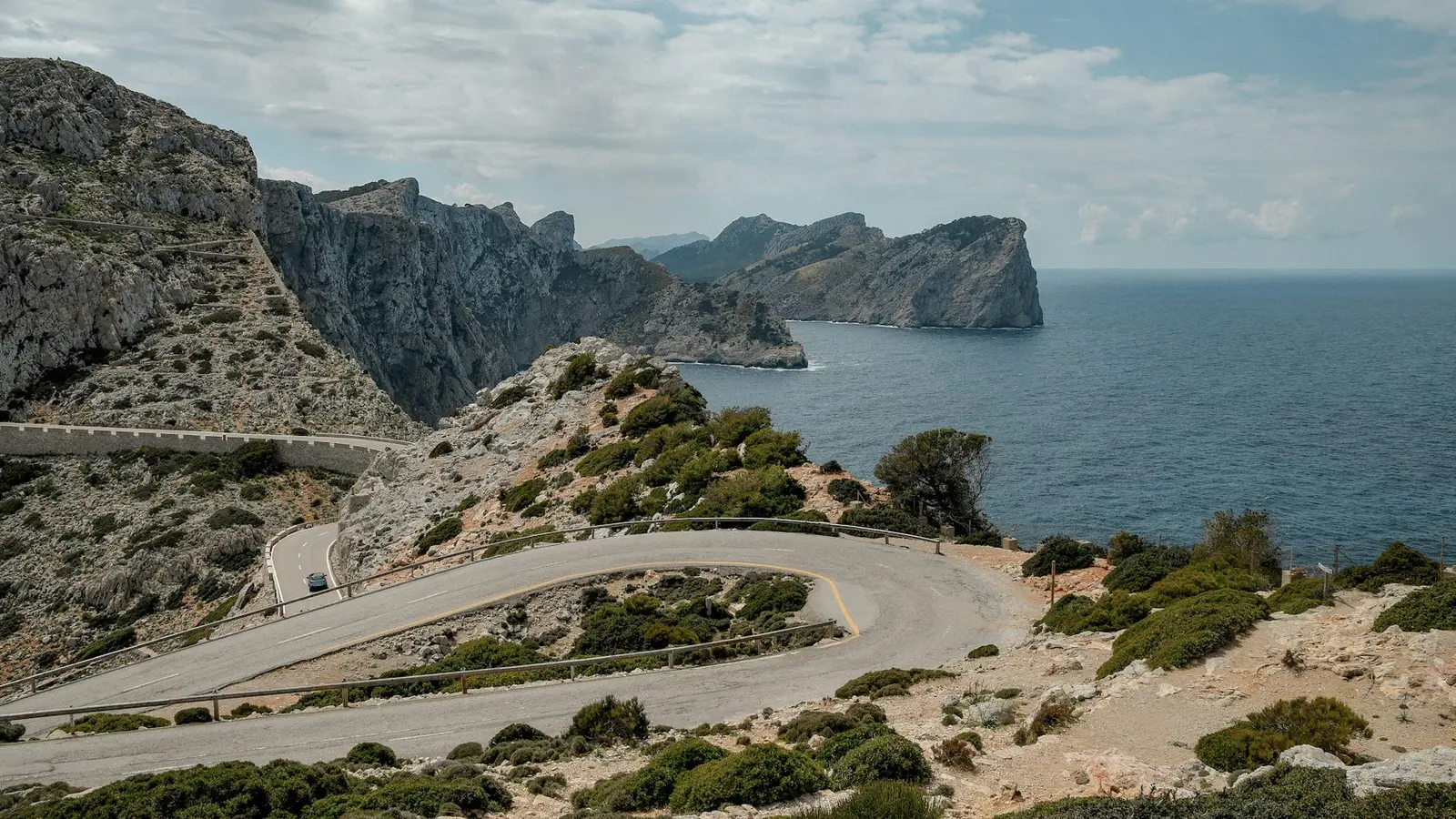
Sa Calobra is the island’s showpiece. It’s a dead-end road, so you descend it first and then have to climb back out — about 10 km at roughly 7%, gaining somewhere around 650–670 m over some 26 hairpins, including the famous “Nus de sa Corbata” where the road loops back over itself. (Reputable sources disagree on the exact figures, so treat them as approximate and check a climb database for GPX.)
Cap de Formentor is the other must-do: not really one climb but a series of short, punchy ramps along a cliff road out to the lighthouse on the island’s northern tip, widely called the most scenic ride in Mallorca. Puig Major is the big objective — the highest paved climb on the island, a steady haul of around 14 km whose road tops out near 850 m (the true 1,436 m summit is a closed military site). Beyond those, the passes around Sóller and the coast road link into almost endless mountain days.
When to go
The season runs broadly February–May and September–October, with the peak in March and April: warm-but-not-hot days, the big organised camps, and that unmistakable cycling-mecca atmosphere. Summer (July–August) is rideable but hot and busy with general tourists, so start early. Deep winter is cooler and can be wet, especially in the Tramuntana, though hardened riders and camps still come for the mild-by-northern-European-standards conditions and lower prices.
Getting there with a bike
Palma de Mallorca (PMI) is the island’s single major airport and is very well connected across Europe — roughly a two-hour flight from the UK — which is a big part of why the island works so well for training camps. Bringing or renting a bike is routine here.
From the airport, the northern cycling bases are about 55–70 km away — roughly a 45–55 minute drive to Port de Pollença. Public buses exist but are slow and awkward with a bike, so most riders use one of the island’s cyclist-specific transfer companies, which run bike-capable vehicles. Once you’re in the north you barely need a car, which is exactly why bike-friendly accommodation matters so much.
Where to base yourself
Port de Pollença is the long-standing cycling capital. The Tramuntana starts at the edge of town, so you’re on the climbs within 10–15 minutes of leaving your hotel, Cap de Formentor is a single ride from the door, and Sa Calobra, Puig Major and the Sóller passes are all reachable in a day with no car transfer. It has the densest concentration of cyclist services on the island.
Nearby alternatives suit different riders: Alcúdia and Port d’Alcúdia are a touch quieter and often cheaper with near-identical mountain access; Playa de Muro on the same bay is a solid all-rounder; and Sóller, tucked in a mountain valley, is for committed climbers who want a pass from the door. For most first trips, though, the northern bays around Pollença are the natural home base.
Where to stay with your bike
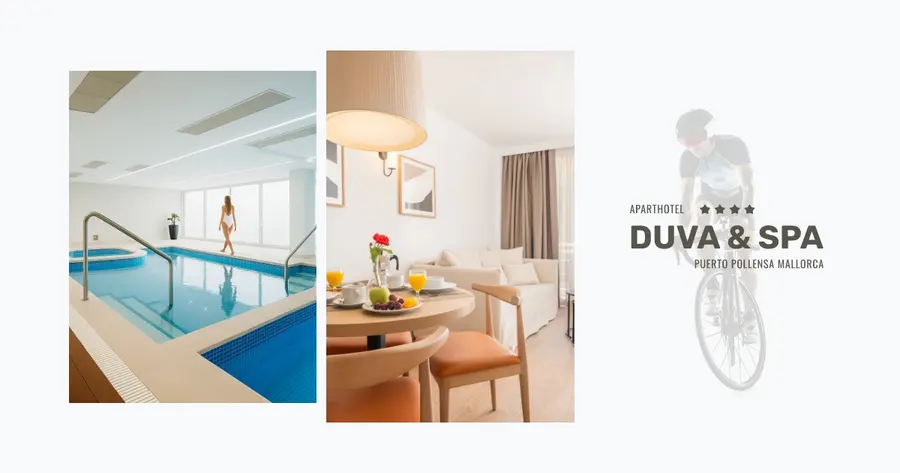
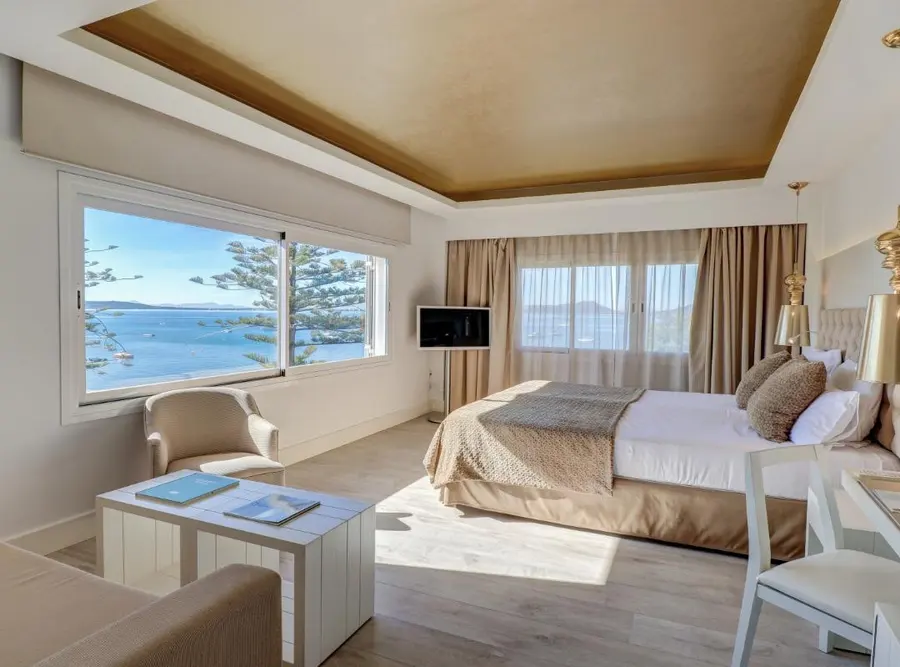
This is where CycleStay comes in. The northern bays have an unusual concentration of hotels set up specifically for cyclists — secure storage so a good bike never sleeps outside, a workshop for pre-ride fettling, a hose for after a dusty day, and an early breakfast built for a big ride. Storage policies do vary and some places charge, so it’s worth confirming when you book. The hotels we’ve checked in Port de Pollença are listed below, each linked to its own site and the source of its cyclist claims so you can verify before booking — and you’ll find more around the Alcúdia bay and Playa de Muro elsewhere on CycleStay.
Sources
Cyclist amenities are self-reported by each hotel and sourced where possible — please confirm the details that matter to you directly with the hotel before booking.