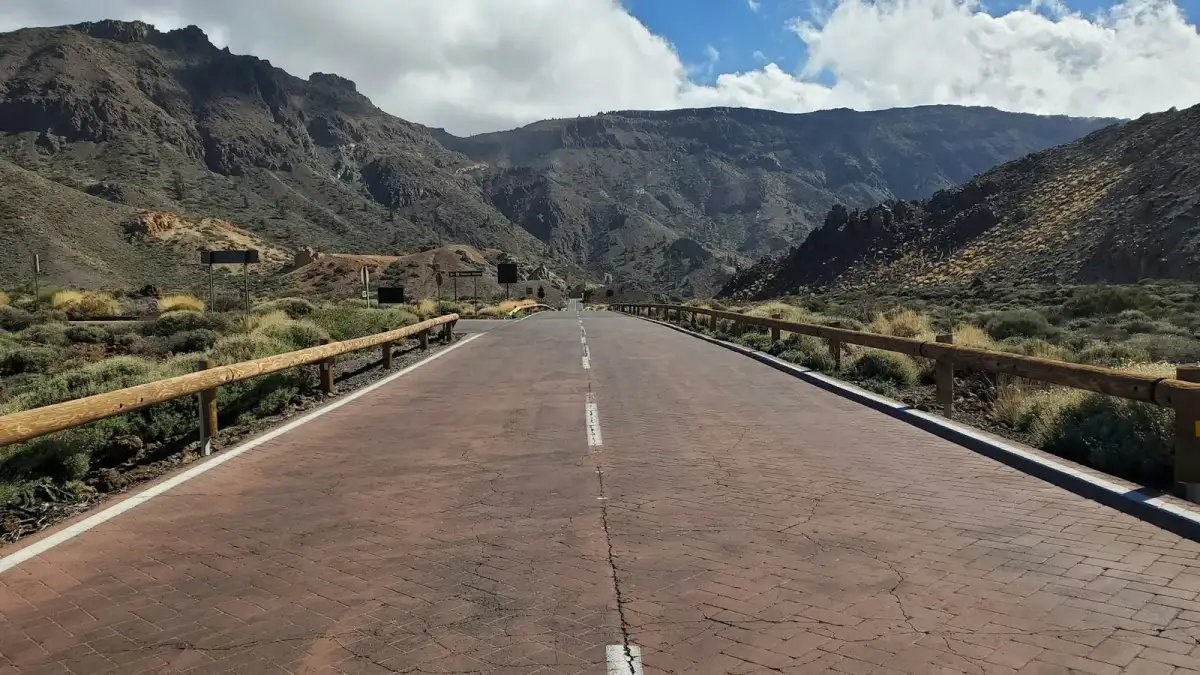
When the Alps close and northern Europe turns grey, the cycling world moves to the Canaries. Spring-like temperatures hold from October to May, and Tenerife owns the continent’s most coveted training asset: Mount Teide, where the road climbs from sea level to 2,360 m in one continuous effort — the kind of sustained sea-to-summit climbing you simply cannot find on the European mainland. Grand Tour contenders block out weeks here every winter; the same roads, and several of the same hotels, are open to everyone else.
Europe’s winter velodrome
The Canaries sit off the Moroccan coast, so winter is the season: steady 18–24 °C on the coasts, long daylight, and dry roads when the rest of Europe is on the turbo trainer. Professional teams have made Tenerife a pre-season institution — training camps concentrate between October and May, with riders sleeping at altitude in the national park and descending to train.
It is the natural counter-season partner to an Alps or Mallorca summer: the same fitness project, continued through the months when the high cols are under snow.
Mount Teide: five roads up a volcano
Every serious ride on Tenerife eventually points at the volcano. Five roads climb to the Las Cañadas plateau at around 2,360 m, and all of them start at or near sea level: from Puerto de la Cruz in the north (about 47.5 km at 5%, ~2,400 m of gain), from Los Cristianos in the south via Vilaflor (51.3 km, ~2,808 m — the biggest single gain), from Playa La Arena in the west (53.5 km, ~2,476 m), from El Médano (54.1 km) and the long way from Santa Cruz (63 km). Figures per Epic Road Rides; treat them as approximate.
The reward for all of them is the same: a lunar landscape inside the caldera, the peak above, and a 40 km descent home. Beyond Teide there’s the vertiginous Masca road in the Teno mountains and the jungle switchbacks of the Anaga peninsula in the northeast — Tenerife packs remarkable variety into one island.
Where to base yourself
Puerto de la Cruz on the north coast is the cycling classic: Teide from the door through the Orotava valley, Masca and Anaga within riding distance, and a real Canarian town rather than a resort strip. The west coast around Santiago del Teide and Playa La Arena puts you at the foot of the west-side climb. The southwest resorts (Costa Adeje and neighbours) suit mixed groups — sunniest coast, biggest hotels, Teide via Vilaflor.
The connoisseur’s move is a night or three at altitude: the Parador inside the national park sits above 2,000 m, and sleeping high before descending to train is exactly the protocol the professional teams follow.
Beyond Tenerife: the rest of the Canaries
Gran Canaria is the other cycling heavyweight — the ascent to Pico de las Nieves (~1,900 m) and the infamous Valley of the Tears are pilgrimage climbs, with Maspalomas as the usual winter base. Lanzarote adds wind-hardened flat training and the Timanfaya volcanic roads, and hosts a famous Ironman. We’ll add verified hotels for those islands as we check them; Tenerife is the natural first stop.
When to go
October to May is the season, with the European winter (November–March) the sweet spot: perfect coastal temperatures and quiet roads midweek. Note that altitude changes everything — the top of Teide can be 15 °C colder than the coast, and winter storms occasionally close the summit roads for a day or two. Summer works too, but the south coast gets hot and the trade-wind afternoons are blustery.
One honest caveat: the Vuelta al Teide granfondo (usually mid-May) fills the island’s bike-friendly beds fast — book early if your trip overlaps.
Where to stay
The hotels below have documented cyclist facilities — secure storage as a minimum, workshops and cycling centres at the dedicated places — and each listing links the source for its claims so you can verify before booking.
Sources
Cyclist amenities are self-reported by each hotel and sourced where possible — please confirm the details that matter to you directly with the hotel before booking.